Atlanta Beltline Secures Land Rights for Entire 22-Mile Mainline Trail
After two decades and nearly 200 closings totaling more than $200 million, land assembly is complete for the Beltline’s full 22-mile mainline trail....
- Land Acquisition & Development
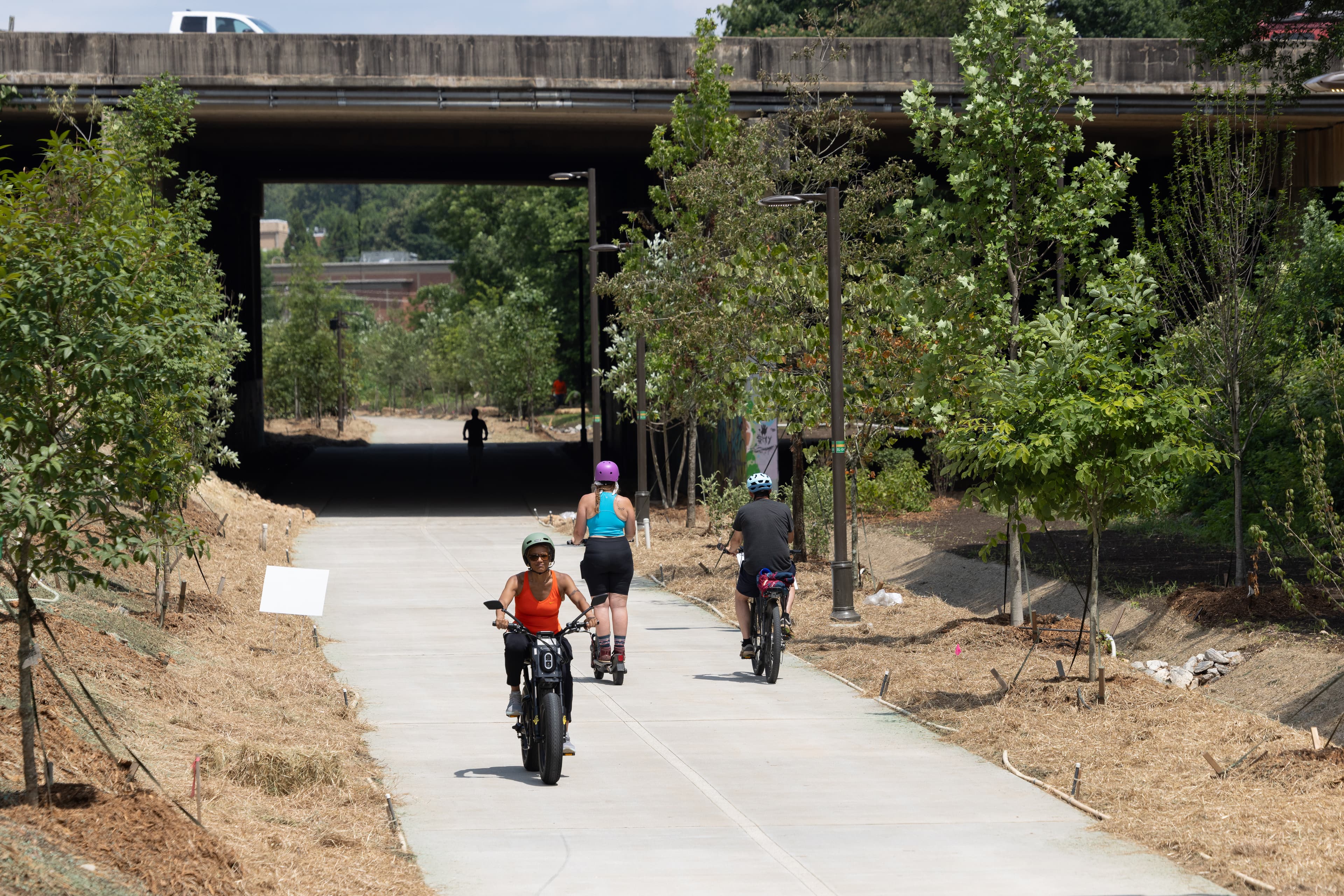
After two decades of assembling land and property rights across Atlanta, the Atlanta Beltline has secured the land rights needed to build the full 22-mile mainline trail, completing the real estate assembly required to connect the more than 45 neighborhoods adjacent to the Beltline. The effort required nearly 200 closings totaling more than $200 million in property purchases across more than 270 acres, with individual acquisitions ranging from a 15-square-foot parcel to a 65-acre tract.
“This is a defining milestone for the Atlanta Beltline and for the future of Atlanta made possible with the support and collaboration of many partners including multiple City administrations, the Atlanta City Council, Atlanta Public Schools, Fulton County, property owners, railroad companies, community organizations, and Atlanta voters who supported the 2016 TSPLOST investment. said Clyde Higgs, President & CEO of Atlanta Beltline, Inc. “For more than 20 years, our team has worked property by property, neighborhood by neighborhood, to assemble the land and property rights needed to make a 22-mile trail around Atlanta possible. Today, that work is complete. We have secured the real estate foundation for the entire mainline trail, bringing us one major step closer to delivering the full Beltline loop by 2030. What began as a vision has become one of the most ambitious urban transformation projects in the country and this milestone gives us the foundation to finish what we started.”
Building Infrastructure for a Large Transformation
The Beltline's full 22-mile mainline trail required an unprecedented real estate effort. Over two decades, the Beltline completed nearly 200 closings involving approximately 90 property purchases and 230 easements. Individual purchases ranged from 15 square feet to 65 acres, with the Beltline team negotiating with nearly every type of landowner, from railroads, utilities and Fortune 500 corporations to homeowners, apartment complexes and religious organizations.
While much of the Beltline follows former freight rail corridors, the Northwest Trail presented a different challenge, requiring the Beltline to establish a new alignment through established neighborhoods and business districts where no former rail corridor existed. To find the best route, the Beltline’s design, real estate, and community engagement teams held community meetings and worked with the PATH Foundation on a preferred alignment for that portion of trail. The Beltline announced the preferred alignment in August 2022 and began acquiring the property along that route.
“This was one of the most complex land-assembly efforts in the Beltline’s history because we weren’t simply following an existing rail corridor,” said Dave Pierce, Vice President of Real Estate and Asset Management at Atlanta Beltline, Inc. “In the Northwest, we had to establish a new route through established neighborhoods and business districts, working with individual property owners, businesses and institutions to assemble the rights needed for the trail. Completing that work across the entire 22-mile corridor is the result of more than two decades of persistence, negotiation and collaboration.”
Pierce joined the Beltline in 2015 and has played a central role in the organization's land acquisition efforts during the project's most active period of expansion. Last year, the Beltline won an Atlanta Business Chronicle Best in Atlanta Real Estate Award in the Infrastructure category for the Southside Trail.
Completing the Land Assembly Which Closes the Northwest Gap
When built, the 4.3-mile Northwest Trail will run from Blandtown to the Lindbergh and Morosgo neighborhoods, connecting the Westside Trail to the Northeast Trail. The assembly included sites along Peachtree Road in Buckhead. Over a two-year span, the Beltline acquired three parcels at 2110 Peachtree Road and bought adjacent property near Bennett Street, creating a 3.2-acre site for the trail, affordable housing and commercial space.
The Northwest Trail connects to some of the largest employers along the Beltline, many of them healthcare providers. Northwest Trail - Segment 2 sits near Piedmont Atlanta Hospital, the largest employer in the Beltline Planning Area, and the Shepherd Center.
Construction is complete or underway on several Northwest Trail segments, and the full 22-mile loop is scheduled for completion by 2030. In June 2026, the Beltline opened 16.7 continuous miles of mainline trail, its longest uninterrupted stretch to date and recently broke ground on Northwest Trail Segment - 3B, which will feature a pedestrian bridge over Northside Drive.
While the land rights necessary to construct the 22-mile mainline trail are secured, the Beltline’s design and real estate teams continue to acquire property when strategic opportunities arise to improve or enhance the trail.
What Has Followed the Trail
The Beltline's land assembly has always been about more than acquiring property for a trail. It has created the physical and economic foundation for a broader model of urban redevelopment - one that pairs infrastructure investment with housing affordability, economic opportunity, public space, arts and culture, health and wellness, and community engagement.
A May economic impact analysis by Econsult Solutions, Inc. found that the Beltline Planning Area has experienced $14.2 billion in private investment, about $15 for every dollar of the $941 million in public money invested, since the project began. It also found private development activity has consistently followed new trail openings by 12 to 24 months. It noted 318 completed private projects, with 93 more in the pipeline, in the Planning Area.
But the Beltline's approach to urban redevelopment extends beyond attracting investment. The Beltline has secured 94 acres of land to support affordable housing and affordable commercial space. This master planning strategy allows the Beltline to create long-term affordable housing and commercial real estate projects by controlling the land.
To date, 4,555 affordable units have been created or preserved within the Beltline TAD, 81 percent of the goal of 5,600 units by 2030.
The completion of the land assembly marks the end of one chapter of the Beltline's development and the beginning of the final push to complete the 22-mile mainline trail. With the real estate foundation secured, the Beltline is focused on delivering the remaining trail segments while continuing to advance the housing, economic development, parks, arts, culture and community investments that make the Beltline more than a trail.
Media assets are available here.
Subscribe to In The Loop, our monthly newsletter, for Beltline news, events, announcements and more.