Atlanta Beltline Sustains 91,000 Jobs and $23 Billion in Annual Economic Output, Positioning the Beltline as a National Model for Urban Redevelopment
Landmark infrastructure investment exceeds $10 billion private investment goal, delivering $14.2 billion in growth and new opportunity across Atlant...
- Economic Development
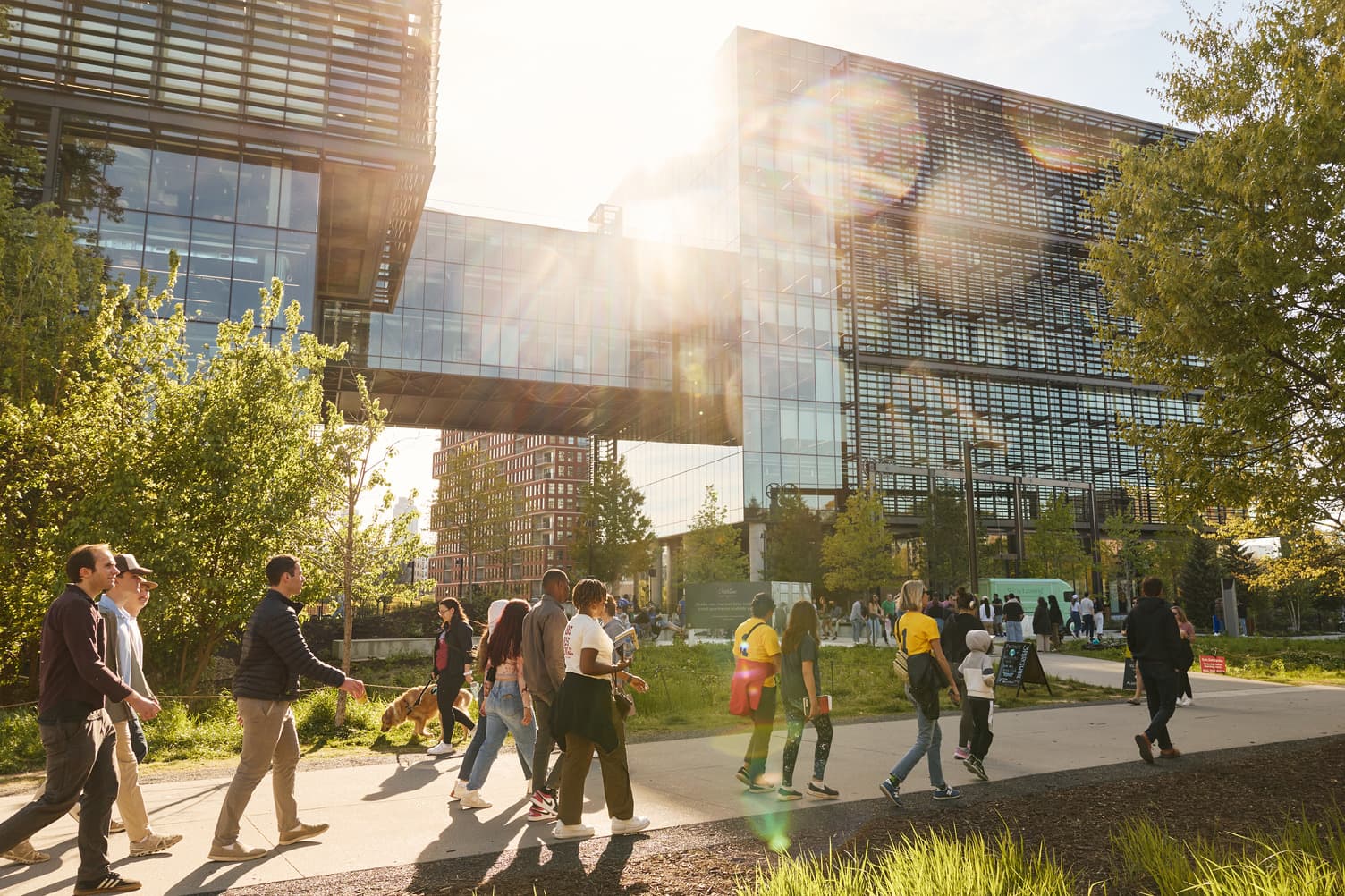
In 2025, activity within the Atlanta Beltline Planning Area sustained more than 91,000 jobs and generated an estimated $23 billion in economic output for the City of Atlanta, according to a new economic impact analysis. The analysis also found that the Atlanta Beltline has catalyzed $14.2 billion in private investment since inception — surpassing its original $10 billion goal years ahead of schedule and reinforcing its position as one of the nation’s most successful urban redevelopment initiatives.
Importantly, the Beltline’s economic impact is helping reverse decades of disinvestment and employment decentralization that once hollowed out Atlanta’s urban core. Many of the jobs now being created along the corridor are returning employment density, residential activity and economic energy back into the center of the city — reconnecting neighborhoods that had experienced long periods of stagnation following suburban expansion and industrial decline. The result is a stronger economic environment where people are increasingly choosing to live, work, invest and build businesses near the city core once again.
The analysis also shows that from 2010-2023 (according to U.S. Census data), the Beltline Planning Area has gained 26,000 residents, reversing the City of Atlanta’s trend of losing residents prior to the 2000s. It’s also a true local asset — of the 2.5 million annual visits, 60 percent are from City of Atlanta locals.
“Since 2022, our Administration has remained committed to ensuring that all of Atlanta benefits from the growth and prosperity of the Beltline,” said Atlanta Mayor Andre Dickens, who also serves on the Atlanta Beltline, Inc board. “Now, with the right people in the right positions, there are policies in place to protect legacy residents and small businesses from being priced out of the communities they built, and strategic plans to use this 20-year-old work in progress to expand access and opportunity for the surrounding communities.”
The analysis, prepared by Econsult Solutions, Inc. (ESI), studied economic and development trends across the Beltline Planning Area — the half-mile radius surrounding the 22-mile corridor — from 2005 through 2025.
“The Atlanta Beltline is proving what's possible when cities invest boldly in infrastructure that connects people, neighborhoods and opportunity,’” said Clyde Higgs, President & CEO Atlanta Beltline, Inc. “When I started in economic development, nobody was talking about green infrastructure in the same breath as job creation. The Beltline is writing the book on what modern urban development looks like — expanding access to jobs, supporting small businesses, improving quality of life. That's why we call it the People's Project.”
Nearly $1 Billion in Public Investment Drives 15:1 Return
Since its inception, the Beltline has invested $941 million through a combination of local Tax Allocation District (TAD) funding, federal and state grants and philanthropic support.
That investment has driven a surge in private development. Annual private investment in the Beltline Planning Area increased from $2.2 billion (2006–2011) to $5.5 billion (2012–2020), reaching $14.2 billion cumulatively by 2025. Notably, private development activity consistently follows new trail segment openings by 12 to 24 months, underscoring the direct link between public infrastructure and private capital.
A $23 Billion Annual Economic Engine
The transformation is perhaps best illustrated along the corridor itself. Where vacant lots and former industrial sites once sat dormant, neighborhood anchors like Lee + White, a redevelopment of the West End community’s former “Warehouse Row” have taken root — bringing jobs, foot traffic and renewed energy to communities that had long waited for investment to arrive.
The Beltline’s economic impact extends well beyond construction activity. According to ESI, Beltline-related development, business activity, and visitor spending generate approximately $23 billion in annual economic output through direct, indirect, and ripple effect jobs across the regional economy.
In total, private developers have completed 318 projects, with 93 additional projects currently in the pipeline, reflecting continued confidence in the Beltline as a long-term investment corridor since 2006. Complementing that growth, the Beltline has acquired 94 acres of land to support equitable, inclusive and sustainable development, helping expand affordable housing and affordable commercial space through long-term public-private partnerships. The Beltline has achieved 79% of its goal to create or preserve 5,600 affordable housing units by 2030, delivering 4,425 units by the end of 2025 within the Beltline TAD.
In 2025, Beltline-related activity is estimated to have generated $23 billion in economic output for the City of Atlanta, contributing $31 million in income, sales, and business tax revenue for the city and $101 million to the State of Georgia.
Sustained Growth and Workforce Opportunity Across the Corridor
The Beltline Planning Area has grown into one of Atlanta’s leading employment centers, creating a halo effect that sustains 91,100 direct, indirect and ripple-effect full-time jobs in 2025 alone.
The Beltline also reports on the goal of creating 50,000 permanent jobs and 48,000 construction jobs. At the end of 2025, the Beltline catalyzed more than 34,000 cumulative permanent jobs, achieving 69 percent of its permanent job creation goal, while exceeding its construction job goal by 126 percent with 60,500 jobs.
Major employers including BlackRock, Mailchimp and OneTrust have made the corridor home, drawn by world-class infrastructure, walkability and a workforce that skews young. Healthcare, hospitality and professional services continue to drive employment growth across the Planning Area.
As investment grows, the Beltline remains focused on ensuring that long-time residents benefit from its transformation through investments in affordable housing, support for small and minority-owned businesses, and strategies to expand access to jobs along the corridor.
That impact is reflected in programs like the Beltline Urban Forestry Career Pathways Program, which provides participants with hands-on training in sustainability, landscaping, forestry and skilled trades while connecting residents to long-term employment opportunities.
“I gained valuable, hands-on experience in growing food, animal agriculture, carpentry, forestry, sustainability, urban landscaping, manual and power tool use and many other skills. I made friends, grew as a person and learned a lot about myself through this program,” said Urayoan Verges-Rodriguez, a Beltline Urban Forestry Career Pathways Program participant. “It even opened professional doors for me, being hired by Trees Atlanta after the end of the program. I am very grateful.”
A National Model for Urban Transformation
As the 22-mile loop moves towards completion by 2030, the Beltline is poised to shape Atlanta’s growth for decades to come while serving as a blueprint for cities across the country seeking to leverage infrastructure investment to drive inclusive economic development. Functioning as both a regional economic corridor and one of Atlanta’s most active public destinations, the Beltline attracts 2.5 million visits annually, with visitors estimated to spend more than $52 million each year on retail, dining and other local businesses.
More than 60 percent of those visits come from local residents, reinforcing the Beltline’s role as “The People’s Project.”
Nathan Ohle, President and CEO of the International Economic Development Council, added, “The Atlanta Beltline has become one of the nation’s leading examples of infrastructure-led economic development. Its ability to connect investment, mobility, greenspace and workforce opportunity demonstrates how strategic public investment can positively shape local economies and improve quality of life. Communities across the country are looking for models that create long-term economic growth while building more resilient and inclusive futures, and the Beltline continues to set an important example.”
Media assets are available here.
Subscribe to In The Loop, our monthly newsletter, for Beltline news, events, announcements and more.