Beltline Transit: What’s Up and What’s Next?
Transit is not only central to the Beltline’s future: it is the next phase of our future.
- Transit
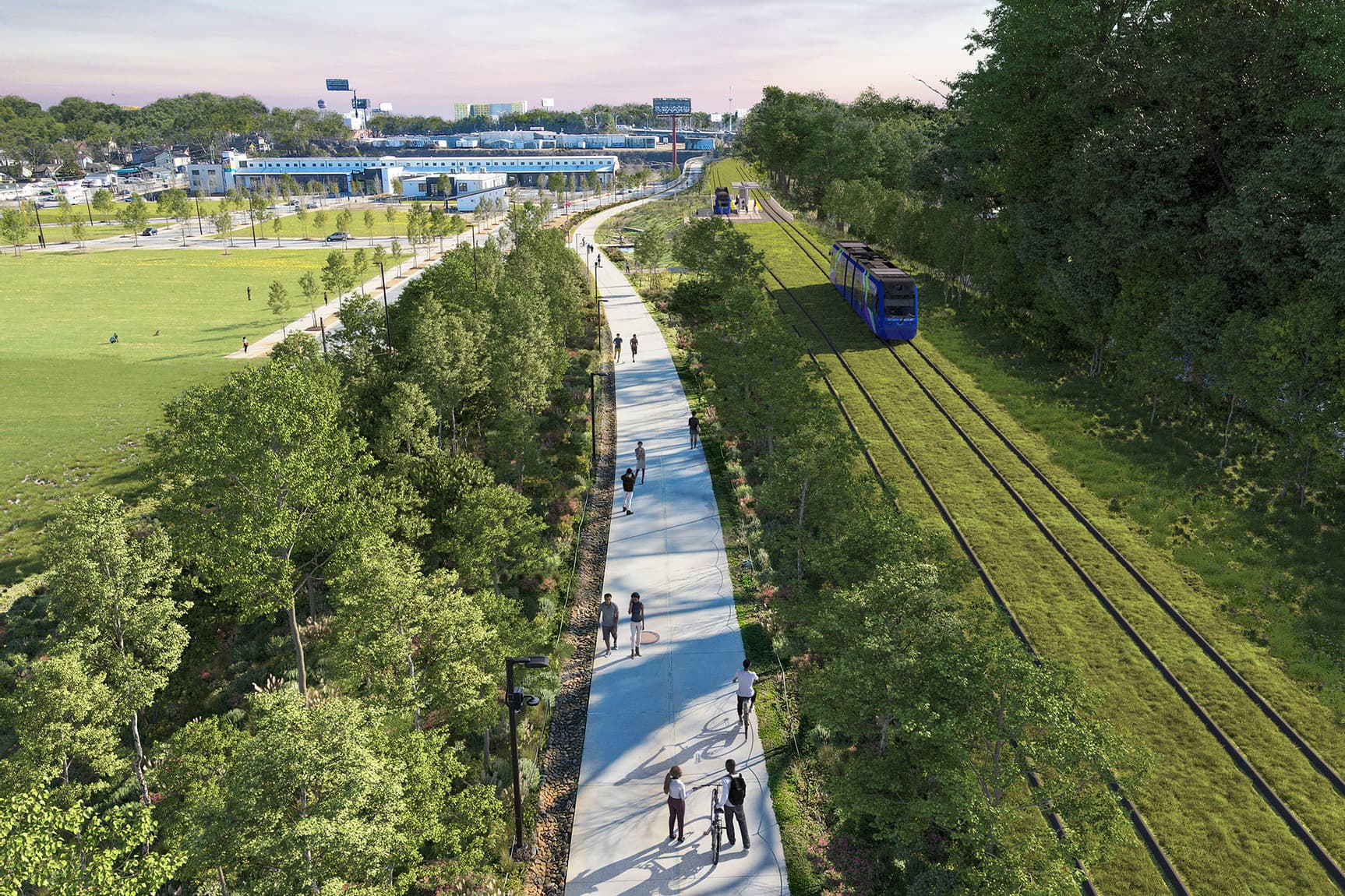
Transit is, and has always been, a core part of the Atlanta Beltline vision. From the earliest planning stages, the goal has been to create a connected, accessible transportation system that links neighborhoods, jobs, and destinations around the Beltline corridor into a larger regional transit system. Yet as we all know, advancing a project of this scale requires creativity, sustained partnerships, resources, and time—particularly to align community priorities with technical requirements, governance processes, and available funding. Make no mistake, though. Transit is not only central to the Beltline’s future: it is the next phase of our future.
Recent Direction on Project Prioritization
Atlanta Beltline, Inc. understands that recent news surrounding the Streetcar East extension has raised questions about the project and concerns regarding transparency. As partners with City of Atlanta and MARTA in advancing connectivity and creating a more livable city, our goal is to address current and future transportation needs, and ensure residents are involved in this important process.
Roles and responsibilities for planning, funding, and implementing Beltline transit are defined by the 2020 Intergovernmental Agreement (IGA) between the City of Atlanta and MARTA, which governs the activation and use of More MARTA funding. The agreement establishes a joint decision-making framework through authorized committees that guide planning, design, construction, and operations for More MARTA–supported projects. As part of this structure, leadership from MARTA, the City of Atlanta, and Atlanta Beltline, Inc., serve on the Program Governance Committee (PGC). The group convenes monthly, and its meetings are conducted with established protocols in a transparent manner.
On March 13, 2025, during a public MARTA Board of Directors meeting, the City announced plans to reprioritize Atlanta Beltline light rail, moving the starting point for light rail construction from the Eastside corridor to the Southside corridor.
In alignment with the City’s direction, Atlanta Beltline has also adjusted its near-term focus to support planning and implementation efforts for the Southside Beltline transit project.
On May 27, 2025, during a Program Governance Committee meeting, the committee decided to pause the funding of two ongoing streetcar feasibility studies. The committee agreed that since the project was at 30% design, the most prudent course of action was to hold expending more funds until a reprioritization of projects could occur and a path forward determined. This decision was consistent with the IGA process, and board notification is not required. However, MARTA is in the practice of updating its Board on a variety of projects, even when it is not required.
As discussions continue around the reprioritization of More MARTA projects, updates will be shared. Final policy decisions and approvals related to the More MARTA Program rest with the City of Atlanta and the MARTA Board of Directors.
Greater Connectivity through Transit Innovation
Concurrently, we will launch a 12-month autonomous shuttle pilot to strengthen last-mile connectivity in Southwest Atlanta. Funded by a $1.75 million Atlanta-region Transit Link Authority grant, the free service will operate along a two-mile route connecting the Atlanta University Center, MARTA West End Station, and the Beltline Southwest Trail at Lee + White. Beginning in Q2 2026, shuttles will run seven days a week, every 10–15 minutes between the MARTA West End Station and the Beltline Southwest Trail at Lee + White. The Atlanta University Center branch will be added to the service in late Q3 in concert with students returning to campus for Fall semester. Designed to leverage technology to provide real transit solutions that expand access, the pilot will assess ridership, impact, and scalability.
To lead these efforts, we recently welcomed our new Vice President of Transit Innovation, Joe Iacobucci. With a background in heavy rail, bus service, and emerging technologies, Iacobucci will develop and implement the Beltline’s transit strategy, working closely with transit partners to enhance regional connectivity and bring the Beltline transit vision to life.
Ongoing Engagement and Next Steps
After three years of rigorous analysis, community engagement, and collaborative planning, the Atlanta Beltline Transit Study is nearing completion. The study is expected to be finalized in Summer 2026. This includes identifying station locations and confirming corridor alignment, key milestones that position the full 22-mile corridor for the next phases of engineering and support future funding efforts.
Atlanta needs enhanced transit access. Given all the complexities and challenges of our city and the times we live in, a world-class, multi-modal transit network is how this will happen. MARTA, the City of Atlanta, and Atlanta Beltline, Inc. continue to work closely to advance solutions that improve connectivity, mobility, and access for residents across the city.
As these discussions continue around the reprioritization of MORE MARTA projects in 2026, we remain committed to transparency through formal board processes, public meetings, official blogs, newsletters, and ongoing community engagement. Through partnership and public process, the long-term vision of transit remains in motion.
Subscribe to In The Loop, our monthly newsletter, for Beltline news, events, announcements and more.