A native of Atlanta, Brandon Sadler's unique approach to illustration and calligraphy has garnered the attention of galleries and media alike culminating in an ever-growing body of work and a place in the contemporary collection of the High Museum. His solo and group exhibitions have brought him accolades as one of Atlanta's most prolific artists. Sadler's aesthetic interests have been informed by his involvement in the American graffiti and street art sub-cultures, which formed the beginnings of his artistic process. The influences of Japanese Ukiyo-e, calligraphy, and other Asian art forms have impacted his aesthetic interests and greatly influenced his unique artistic style. This artistic inquiry has led to the creation of a body of work exhibited in galleries and the public arena, that merges East and West fluidly. Often, the resulting imagery speaks to a universal human condition through a narrative style encrypted with symbolism, text, and decorative elements. By exploring broad themes relating to current societal conditions, he exposes man's battle with himself, society, and nature. Sadler's transformation of these cultures illustrates perfectly, the universality of art and its ability to activate the individual and the community.
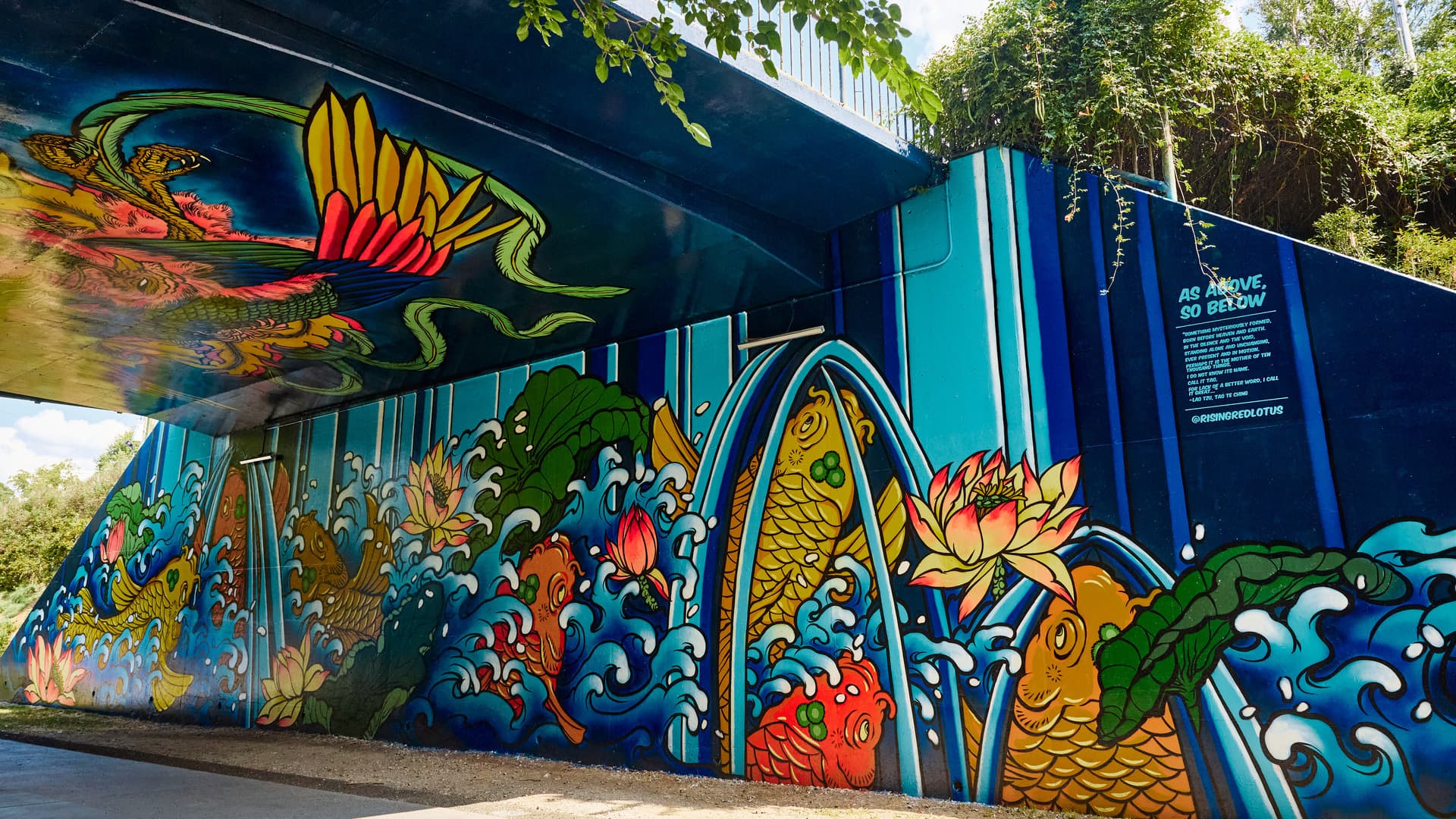
"As Above, So Below" marks Brandon Sadler's third mural on the Eastside Trail, nearly fifteen years after he first painted the site in 2012. The work reflects both a personal return and an evolution in his public mural practice, transforming the entire tunnel passage—including both side walls and ceiling—into an immersive mythological landscape. Painted across the ceiling, K’un, guardian of the Lotus Garden, descends from her divine form as a phoenix above into her human form on the wall below, welcoming visitors into the tunnel and offering the Lotus of Awakening as a symbol of transformation, resilience, and inner potential. On the wall across from her, koi gather beneath the Falls of Eternity to celebrate her arrival. The imagery is painted with an energizing palette inspired by the ceiling paintings found in Korean Buddhist temples. The work's title is derived from the Principle of Correspondence, expressed through the phrase “as above, so below,” which explores the relationship between the spiritual and material worlds, suggesting that what exists within us is reflected in the universe around us, and vice versa.